Buy modelplac.eu ?
We are moving the project
modelplac.eu .
Are you interested in purchasing the domain
modelplac.eu ?
domain@kv-gmbh.de · 0541-91531010
Buy modelplac.eu ?
'N or n-sample in statistics?'
In statistics, an N-sample refers to a sample size of N, where N represents the number of individual observations or data points in the sample. The letter N is often used to denote the size of a sample in statistical analysis. It is important to have a sufficiently large sample size (N) to ensure the reliability and validity of statistical results. A larger sample size generally leads to more accurate and precise estimates of population parameters. **
What is the definition of the sets n x n and n x n x n for the set of natural numbers n? Please visualize these sets.
The set n x n is the Cartesian product of the set of natural numbers with itself, resulting in a set of ordered pairs of natural numbers. For example, if n = 3, then n x n = {(1,1), (1,2), (1,3), (2,1), (2,2), (2,3), (3,1), (3,2), (3,3)}. This can be visualized as a grid with rows and columns of natural numbers. The set n x n x n is the Cartesian product of the set of natural numbers with itself three times, resulting in a set of ordered triples of natural numbers. For example, if n = 2, then n x n x n = {(1,1,1), (1,1,2), (1,2,1), (1,2,2), (2,1,1), (2,1,2), (2,2, **


Similar search terms for N
Top-Angebote
Products related to N:
-
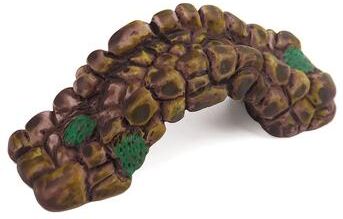
Inspire Select Miniature Fairy Garden Lighthouse & Bridge Resin Ornament DIY Landscape Decor Accessories style NCreate a magical tiny world with this charming fairy garden accessory designed to bring imagination and creativity to miniature landscapes. Featuring adorable lighthouse, bridge, cottage, and water wellinspired details, this decorative ornament adds...50,99 $*Shipping: 0,00 $Secure redirect to the provider



-
Can you show that this mapping is a bijection: n x n -> n^m * 2^n+1 - 1?
To show that the mapping n x n -> n^m * 2^n+1 - 1 is a bijection, we need to demonstrate that it is both injective and surjective. To show injectivity, we need to prove that distinct elements in the domain map to distinct elements in the codomain. This can be done by showing that if (a, b) and (c, d) are distinct pairs in n x n, then n^m * 2^a+1 - 1 and n^m * 2^c+1 - 1 are distinct in n^m * 2^n+1 - 1. To show surjectivity, we need to prove that every element in the codomain has a pre-image in the domain. This can be done by showing that for every element in n^m * 2^n+1 - 1, there exists a pair (a, b) in n x n such that **
-
Are the sets N and N of equal power?
Yes, the sets N and N are of equal power. Both sets represent the set of natural numbers, which includes all positive integers starting from 1. Since both sets have the same elements and there is a one-to-one correspondence between them (each natural number in N corresponds to the same natural number in N), they are considered to have the same cardinality or power. **
-
What is the limit of n * sqrt(n+71)?
The limit of n * sqrt(n+71) as n approaches infinity is infinity. This can be seen by considering the behavior of the function as n becomes very large. As n increases, the value of n * sqrt(n+71) also increases without bound, as the square root term dominates the behavior of the function. Therefore, the limit of n * sqrt(n+71) as n approaches infinity is infinity. **
-
Is a mapping from n to n not equinumerous, but countable? And would a mapping from n to n be countable if n were natural numbers without zero?
A mapping from n to n is equinumerous and countable because it is a one-to-one correspondence between the natural numbers. If n were natural numbers without zero, a mapping from n to n would still be countable because it would still be a one-to-one correspondence between the natural numbers. In both cases, the mapping is countable because it can be put into a one-to-one correspondence with the set of natural numbers. **


How do you eliminate n^2, 2n, n, and 6?
To eliminate n^2, 2n, n, and 6, you can factor out the common factor, which is n, from each term. This will leave you with n(n + 2 + 1 + 6/n). **
What is the convergence of sqrt(n^2 + 1)/n?
The convergence of the sequence sqrt(n^2 + 1)/n is 1. This can be seen by taking the limit as n approaches infinity. As n becomes very large, the n^2 term dominates the 1 term inside the square root, and the expression becomes approximately sqrt(n^2)/n, which simplifies to n/n = 1. Therefore, the sequence converges to 1 as n goes to infinity. **
Top-Angebote
Products related to N:
-
Baby Trend Sit N' Sway Portable Swing, Dash TanThe world is bustling, but the Baby Trend Sit N' Sway Swing will bring comfort and tranquility to both you and your little one. The Sit N' Sway features three swaying speeds and eight melodies to keep your baby calm and entertained.99,99 $*Shipping: 0,00 $Secure redirect to the provider
-
Baby Trend Sit N' Stand® Double 2.0 Stroller, Dash BlackStreamlined, single front wheels allow for an easy push and a more compact footprint for the new Sit N' Stand Double 2.0. Your two will stroll in quality, comfort and style with this redesigned favorite of growing families.214,99 $*Shipping: 0,00 $Secure redirect to the provider
-
Inspire Select Miniature Fairy Garden Lighthouse & Bridge Resin Ornament DIY Landscape Decor Accessories style NCreate a magical tiny world with this charming fairy garden accessory designed to bring imagination and creativity to miniature landscapes. Featuring adorable lighthouse, bridge, cottage, and water wellinspired details, this decorative ornament adds...50,99 $*Shipping: 0,00 $Secure redirect to the provider
-
'N or n-sample in statistics?'
In statistics, an N-sample refers to a sample size of N, where N represents the number of individual observations or data points in the sample. The letter N is often used to denote the size of a sample in statistical analysis. It is important to have a sufficiently large sample size (N) to ensure the reliability and validity of statistical results. A larger sample size generally leads to more accurate and precise estimates of population parameters. **
-
What is the definition of the sets n x n and n x n x n for the set of natural numbers n? Please visualize these sets.
The set n x n is the Cartesian product of the set of natural numbers with itself, resulting in a set of ordered pairs of natural numbers. For example, if n = 3, then n x n = {(1,1), (1,2), (1,3), (2,1), (2,2), (2,3), (3,1), (3,2), (3,3)}. This can be visualized as a grid with rows and columns of natural numbers. The set n x n x n is the Cartesian product of the set of natural numbers with itself three times, resulting in a set of ordered triples of natural numbers. For example, if n = 2, then n x n x n = {(1,1,1), (1,1,2), (1,2,1), (1,2,2), (2,1,1), (2,1,2), (2,2, **
-
Can you show that this mapping is a bijection: n x n -> n^m * 2^n+1 - 1?
To show that the mapping n x n -> n^m * 2^n+1 - 1 is a bijection, we need to demonstrate that it is both injective and surjective. To show injectivity, we need to prove that distinct elements in the domain map to distinct elements in the codomain. This can be done by showing that if (a, b) and (c, d) are distinct pairs in n x n, then n^m * 2^a+1 - 1 and n^m * 2^c+1 - 1 are distinct in n^m * 2^n+1 - 1. To show surjectivity, we need to prove that every element in the codomain has a pre-image in the domain. This can be done by showing that for every element in n^m * 2^n+1 - 1, there exists a pair (a, b) in n x n such that **
-
Are the sets N and N of equal power?
Yes, the sets N and N are of equal power. Both sets represent the set of natural numbers, which includes all positive integers starting from 1. Since both sets have the same elements and there is a one-to-one correspondence between them (each natural number in N corresponds to the same natural number in N), they are considered to have the same cardinality or power. **
Similar search terms for N
-
Arte-N Furniture Ltd Trend Manufactured Wood Wardrobe Beige 222cm H X 250cm W X 63cm DElevate your bedroom storage with the Trend TS-02 Sliding Door Wardrobe, a stylish and spacious solution perfect for contemporary interiors. This 2500mm wide wardrobe combines sleek design with ample storage to enhance your bedroom organisation. Arte-N Furniture Ltd1329,99 £*Shipping: 19,99 £Secure redirect to the provider
-
Uplift Treasures Personalized Christmas Knit Stocking With Snowflake Design nProduct Description: Celebrate the holiday season with this cozy knit Christmas stocking featuring a beautiful snowflake pattern and festive letter design. Perfect for hanging by the fireplace, decorating your Christmas tree, or filling with small...40,97 $*Shipping: 0,00 $Secure redirect to the provider
-
What is the limit of n * sqrt(n+71)?
The limit of n * sqrt(n+71) as n approaches infinity is infinity. This can be seen by considering the behavior of the function as n becomes very large. As n increases, the value of n * sqrt(n+71) also increases without bound, as the square root term dominates the behavior of the function. Therefore, the limit of n * sqrt(n+71) as n approaches infinity is infinity. **
-
Is a mapping from n to n not equinumerous, but countable? And would a mapping from n to n be countable if n were natural numbers without zero?
A mapping from n to n is equinumerous and countable because it is a one-to-one correspondence between the natural numbers. If n were natural numbers without zero, a mapping from n to n would still be countable because it would still be a one-to-one correspondence between the natural numbers. In both cases, the mapping is countable because it can be put into a one-to-one correspondence with the set of natural numbers. **
-
How do you eliminate n^2, 2n, n, and 6?
To eliminate n^2, 2n, n, and 6, you can factor out the common factor, which is n, from each term. This will leave you with n(n + 2 + 1 + 6/n). **
-
What is the convergence of sqrt(n^2 + 1)/n?
The convergence of the sequence sqrt(n^2 + 1)/n is 1. This can be seen by taking the limit as n approaches infinity. As n becomes very large, the n^2 term dominates the 1 term inside the square root, and the expression becomes approximately sqrt(n^2)/n, which simplifies to n/n = 1. Therefore, the sequence converges to 1 as n goes to infinity. **
* All prices are inclusive of VAT and, if applicable, plus shipping costs. The offer information is based on the details provided by the respective shop and is updated through automated processes. Real-time updates do not occur, so deviations can occur in individual cases. ** Note: Parts of this content were created by AI.