Buy modelplac.eu ?
We are moving the project
modelplac.eu .
Are you interested in purchasing the domain
modelplac.eu ?
domain@kv-gmbh.de · 0541-91531010
Buy modelplac.eu ?
Why does the image become blurry when magnifying with a microscope?
When magnifying an image with a microscope, the image can become blurry due to the limitations of the microscope's optics and the physics of light. As the magnification increases, the depth of field decreases, making it more difficult to keep the entire image in focus. Additionally, the quality of the microscope's lenses and the amount of light available can also affect the clarity of the image. These factors can lead to a loss of sharpness and detail, resulting in a blurry image at higher magnifications. **
What is the difference between a magnifying glass and a microscope?
A magnifying glass is a simple optical device that uses a single lens to magnify objects, typically used for viewing small details such as text or small objects. On the other hand, a microscope is a more complex optical instrument that uses multiple lenses and a light source to magnify and visualize tiny objects at a much higher level of detail, often used for scientific research and medical diagnosis. Microscopes also have the ability to magnify objects to a much greater extent than a magnifying glass. **


Similar search terms for LightInthebox-4K-Microscope-Magnifying
Top-Angebote
Products related to LightInthebox-4K-Microscope-Magnifying:
-
Scholastic Microscope (with smartphone adapter)Travel deep into the microscopic realm! With this high-quality student microscope, Thames & Kosmos unlocks wonders of the world that are too small to see with the naked eye. Plus, the universal smartphone adapter lets you use your own smartphone...42,99 $*Shipping: 0,00 $Secure redirect to the provider
-
Snug & Styled Kids Microscope Educational Science Experiment Kit With LED Light For Students Kids Microscope Educational Science Experiment Kit With LED Light For StudentsSpark curiosity and bring science to life with a handson learning tool designed to inspire young explorers. This kids microscope opens the door to the microscopic world, making learning interactive, exciting, and visually engaging. Perfect for home...49,97 $*Shipping: 0,00 $Secure redirect to the provider
-
Uplift Essentials Professional Drone With 4K 6K 8K Camera Obstacle Avoidance And Folding Design blue 4k 1 BatteryTake your aerial photography to the next level with our professional FPV drone, equipped with highresolution cameras, smart obstacle avoidance, and a folding design for portability. Featuring 4K, 6K, and 8K options, this drone captures stunning...219,97 $*Shipping: 0,00 $Secure redirect to the provider
-
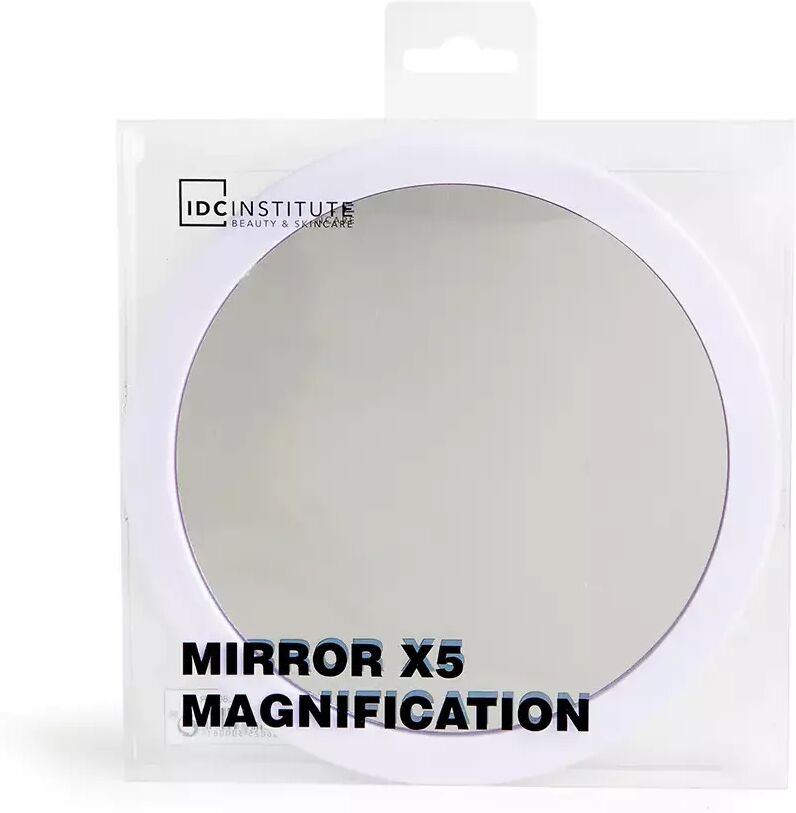
Idc Institute Mirror X5 Magnifying MirrorHealth and Beauty Brushes and Accessories Idc Institute Mirror X5 Magnifying Mirror What is Mirror X5 Magnifying Mirror? The Mirror X5 is a magnifying mirror from IDC Institute that enlarges the image five times, allowing you to see details that are difficult to see with the naked eye. It's a simple, cordless, battery-free accessory designed for the vanity or bathroom. Benefits Five magnifications that help you see every pore, every hair, and every line of makeup with precision. Greater precision when lining the eyes, applying mascara, or defining the lips. It facilitates care gestures such as plucking eyebrows with tweezers, removing contact lenses, or checking the skin. No batteries or connection required: always ready to use. Who is it for? For those who wear makeup daily, for people with presbyopia or who need to get very close to the mirror to see well, and for those who wax their eyebrows or mustache at home. How to use Mirror X5 Magnifying Mirror? Place it near a good light source, preferably natural, and move closer until the image is sharp: with 5x magnification, the focusing distance is short. Use it with a regular mirror to check the overall result. Product Use Clean it with a soft, dry or slightly damp cloth, without abrasive products. Do not leave it in direct sunlight near a window: the magnifying glass concentrates the light and can heat nearby objects.4,03 £*Shipping: 3,99 £Secure redirect to the provider


-
How do you compare the light paths of a magnifying glass and a compound microscope?
Both a magnifying glass and a compound microscope use lenses to bend light rays in order to magnify an object. However, a magnifying glass has a single lens that produces a magnified virtual image that can be seen by the naked eye. On the other hand, a compound microscope uses multiple lenses to produce a magnified real image that is then further magnified by the eyepiece. This allows for much higher magnification and resolution compared to a magnifying glass. **
-
How do you compare the paths of light in a magnifying glass and a compound microscope?
The paths of light in a magnifying glass and a compound microscope are similar in that they both use lenses to bend and focus light. In a magnifying glass, the light passes through a single convex lens, which causes the light rays to converge and form a magnified image. In a compound microscope, the light passes through multiple lenses, including an objective lens and an eyepiece, which work together to magnify the image. Additionally, the compound microscope often includes a mirror or light source to illuminate the specimen being viewed. Overall, both the magnifying glass and compound microscope use lenses to manipulate light in order to magnify and focus an image. **
-
What is the resolution capacity of the human eye compared to a microscope and a magnifying glass?
The human eye has a resolution capacity of about 0.2 mm, which means it can distinguish two points that are at least 0.2 mm apart. In comparison, a microscope can have a resolution capacity of around 0.2 micrometers, allowing it to distinguish two points that are only 0.2 micrometers apart. A magnifying glass falls in between, with a resolution capacity better than the human eye but not as high as a microscope, typically around 0.1 mm. **
-
What is the resolving power of the human eye compared to a microscope and a magnifying glass?
The resolving power of the human eye is limited to about 0.2 mm, which means it can distinguish two points that are at least 0.2 mm apart. In comparison, a microscope has a much higher resolving power, typically around 0.2 micrometers, allowing it to distinguish smaller details. A magnifying glass falls in between, with a resolving power better than the human eye but not as high as a microscope, typically around 0.1 mm. **


Which microscope is a nano-microscope?
A nano-microscope is a type of microscope that is capable of imaging objects at the nanoscale, which is on the order of billionths of a meter. One example of a nano-microscope is the scanning tunneling microscope (STM), which uses a sharp metal tip to scan the surface of a sample and create a detailed image of its atomic structure. Another example is the atomic force microscope (AFM), which uses a sharp tip to measure forces between the tip and the sample surface, allowing for high-resolution imaging of nanoscale features. Both of these microscopes are capable of imaging at the nanoscale and are therefore considered nano-microscopes. **
How do I return something at Lightinthebox?
To return an item at Lightinthebox, you will need to first log in to your account and go to the "My Orders" section. Find the order that contains the item you want to return and click on "Return & Refund" to start the return process. Follow the instructions to select the item you want to return and the reason for the return. After submitting the return request, you will receive further instructions on how to send the item back and receive a refund or exchange. **
Top-Angebote
Products related to LightInthebox-4K-Microscope-Magnifying:
-
Combo Retail Shop Kids Science Microscope, Pocket Microscope, Electric Mini Handheld Microscope, Outdoor Educational Toy, Child Interest pinkUnlock the wonders of science with the Kids Science Microscope 60200x, designed to captivate young minds and inspire a passion for discovery. This electric mini handheld microscope offers a portable, easytouse solution for children who love to...44,97 $*Shipping: 0,00 $Secure redirect to the provider
-
Retailers Go Educational Mini Handheld Microscope With LED Light Battery Powered Kid Science Experiment Pocket Microscope Kids Scienc Educational Mini Handheld Microscope With LED Light Battery Powered Kid Science Experiment Pocket Microscope Kids SciencFeature:1. Safe Material: The mini pocket microscope is made of safe and durable ABS material, ensuring reliability, odorlessness, and resistance to breakage. It is particularly suitable for children to play with, providing a safe and enjoyable...39,97 $*Shipping: 0,00 $Secure redirect to the provider
-
Scholastic Microscope (with smartphone adapter)Travel deep into the microscopic realm! With this high-quality student microscope, Thames & Kosmos unlocks wonders of the world that are too small to see with the naked eye. Plus, the universal smartphone adapter lets you use your own smartphone...42,99 $*Shipping: 0,00 $Secure redirect to the provider
-
Snug & Styled Kids Microscope Educational Science Experiment Kit With LED Light For Students Kids Microscope Educational Science Experiment Kit With LED Light For StudentsSpark curiosity and bring science to life with a handson learning tool designed to inspire young explorers. This kids microscope opens the door to the microscopic world, making learning interactive, exciting, and visually engaging. Perfect for home...49,97 $*Shipping: 0,00 $Secure redirect to the provider
-
Why does the image become blurry when magnifying with a microscope?
When magnifying an image with a microscope, the image can become blurry due to the limitations of the microscope's optics and the physics of light. As the magnification increases, the depth of field decreases, making it more difficult to keep the entire image in focus. Additionally, the quality of the microscope's lenses and the amount of light available can also affect the clarity of the image. These factors can lead to a loss of sharpness and detail, resulting in a blurry image at higher magnifications. **
-
What is the difference between a magnifying glass and a microscope?
A magnifying glass is a simple optical device that uses a single lens to magnify objects, typically used for viewing small details such as text or small objects. On the other hand, a microscope is a more complex optical instrument that uses multiple lenses and a light source to magnify and visualize tiny objects at a much higher level of detail, often used for scientific research and medical diagnosis. Microscopes also have the ability to magnify objects to a much greater extent than a magnifying glass. **
-
How do you compare the light paths of a magnifying glass and a compound microscope?
Both a magnifying glass and a compound microscope use lenses to bend light rays in order to magnify an object. However, a magnifying glass has a single lens that produces a magnified virtual image that can be seen by the naked eye. On the other hand, a compound microscope uses multiple lenses to produce a magnified real image that is then further magnified by the eyepiece. This allows for much higher magnification and resolution compared to a magnifying glass. **
-
How do you compare the paths of light in a magnifying glass and a compound microscope?
The paths of light in a magnifying glass and a compound microscope are similar in that they both use lenses to bend and focus light. In a magnifying glass, the light passes through a single convex lens, which causes the light rays to converge and form a magnified image. In a compound microscope, the light passes through multiple lenses, including an objective lens and an eyepiece, which work together to magnify the image. Additionally, the compound microscope often includes a mirror or light source to illuminate the specimen being viewed. Overall, both the magnifying glass and compound microscope use lenses to manipulate light in order to magnify and focus an image. **
Similar search terms for LightInthebox-4K-Microscope-Magnifying
-
Uplift Essentials Professional Drone With 4K 6K 8K Camera Obstacle Avoidance And Folding Design blue 4k 1 BatteryTake your aerial photography to the next level with our professional FPV drone, equipped with highresolution cameras, smart obstacle avoidance, and a folding design for portability. Featuring 4K, 6K, and 8K options, this drone captures stunning...219,97 $*Shipping: 0,00 $Secure redirect to the provider
-
Idc Institute Mirror X5 Magnifying MirrorHealth and Beauty Brushes and Accessories Idc Institute Mirror X5 Magnifying Mirror What is Mirror X5 Magnifying Mirror? The Mirror X5 is a magnifying mirror from IDC Institute that enlarges the image five times, allowing you to see details that are difficult to see with the naked eye. It's a simple, cordless, battery-free accessory designed for the vanity or bathroom. Benefits Five magnifications that help you see every pore, every hair, and every line of makeup with precision. Greater precision when lining the eyes, applying mascara, or defining the lips. It facilitates care gestures such as plucking eyebrows with tweezers, removing contact lenses, or checking the skin. No batteries or connection required: always ready to use. Who is it for? For those who wear makeup daily, for people with presbyopia or who need to get very close to the mirror to see well, and for those who wax their eyebrows or mustache at home. How to use Mirror X5 Magnifying Mirror? Place it near a good light source, preferably natural, and move closer until the image is sharp: with 5x magnification, the focusing distance is short. Use it with a regular mirror to check the overall result. Product Use Clean it with a soft, dry or slightly damp cloth, without abrasive products. Do not leave it in direct sunlight near a window: the magnifying glass concentrates the light and can heat nearby objects.4,03 £*Shipping: 3,99 £Secure redirect to the provider
-
Snug & Styled Kids HD Digital Microscope With Screen Portable Electronic Magnifier Science Exploration Toy Kids HD Digital Microscope With Screen Portable Electronic Magnifier Science Exploration ToyDiscover a world of hidden details and spark endless curiosity with this digital microscope for kids. Designed for young explorers, it transforms everyday objects into fascinating discoveries through a bright HD display and easytouse controls....59,97 $*Shipping: 0,00 $Secure redirect to the provider
-
Inspired Deals Kids HD Digital Microscope With 2 Inch Screen, Portable STEM Science Toy Kids HD Digital Microscope With 2 Inch Screen, Portable STEM Science ToyTurn everyday objects into exciting discoveries with a kids digital microscope designed to make learning feel like an adventure. This compact handheld digital microscope lets young explorers examine leaves, insects, coins, fabrics, rocks, and more...64,97 $*Shipping: 0,00 $Secure redirect to the provider
-
What is the resolution capacity of the human eye compared to a microscope and a magnifying glass?
The human eye has a resolution capacity of about 0.2 mm, which means it can distinguish two points that are at least 0.2 mm apart. In comparison, a microscope can have a resolution capacity of around 0.2 micrometers, allowing it to distinguish two points that are only 0.2 micrometers apart. A magnifying glass falls in between, with a resolution capacity better than the human eye but not as high as a microscope, typically around 0.1 mm. **
-
What is the resolving power of the human eye compared to a microscope and a magnifying glass?
The resolving power of the human eye is limited to about 0.2 mm, which means it can distinguish two points that are at least 0.2 mm apart. In comparison, a microscope has a much higher resolving power, typically around 0.2 micrometers, allowing it to distinguish smaller details. A magnifying glass falls in between, with a resolving power better than the human eye but not as high as a microscope, typically around 0.1 mm. **
-
Which microscope is a nano-microscope?
A nano-microscope is a type of microscope that is capable of imaging objects at the nanoscale, which is on the order of billionths of a meter. One example of a nano-microscope is the scanning tunneling microscope (STM), which uses a sharp metal tip to scan the surface of a sample and create a detailed image of its atomic structure. Another example is the atomic force microscope (AFM), which uses a sharp tip to measure forces between the tip and the sample surface, allowing for high-resolution imaging of nanoscale features. Both of these microscopes are capable of imaging at the nanoscale and are therefore considered nano-microscopes. **
-
How do I return something at Lightinthebox?
To return an item at Lightinthebox, you will need to first log in to your account and go to the "My Orders" section. Find the order that contains the item you want to return and click on "Return & Refund" to start the return process. Follow the instructions to select the item you want to return and the reason for the return. After submitting the return request, you will receive further instructions on how to send the item back and receive a refund or exchange. **
* All prices are inclusive of VAT and, if applicable, plus shipping costs. The offer information is based on the details provided by the respective shop and is updated through automated processes. Real-time updates do not occur, so deviations can occur in individual cases. ** Note: Parts of this content were created by AI.